Audio Engineering
Dante vs. USB for Live Recording
Which approach makes sense for a live recording system?
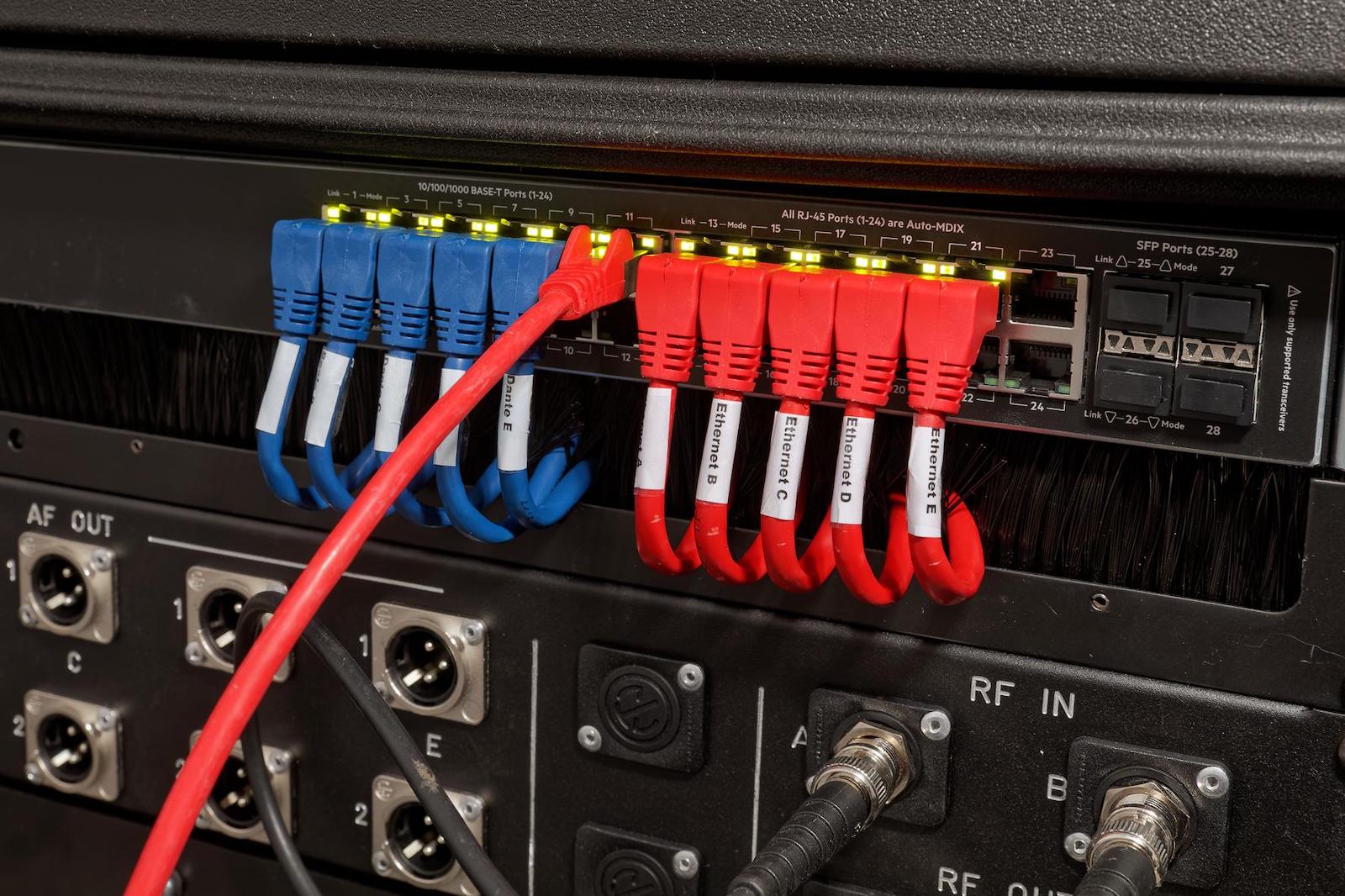
When a live sound system also needs to record, there are several ways to get audio from the console to a computer.
One of the simplest is USB. Many modern digital consoles can connect directly to a computer and send multiple channels of audio to a recording program.
Dante offers another approach. Instead of connecting the computer directly to the console, the computer becomes another device on the audio network.
So which one should you use?
The answer depends on the system.
For a simple setup where the recording computer is sitting next to the console, USB may be the easier choice. Dante becomes more useful when the recording system needs to be somewhere else, when multiple devices need access to the same audio, or when recording is part of a larger networked system.
01
USB Recording
USB is straightforward.
A computer is connected directly to the console, and the console appears as an audio interface to the computer. Depending on the console, this can provide multiple channels of audio for recording into a DAW.
For a small production, this may be all that is needed. If the recording computer is sitting next to the console, there may be little reason to introduce a network just to get audio into the computer.
02
Dante Recording
With Dante, the computer does not have to be directly connected to the console.
A computer with a wired Ethernet connection can become a Dante device on the network using software such as Dante Virtual Soundcard. Audio can then be routed between the computer and other Dante-enabled devices on that network.
The computer could be located at the console, but it could also be somewhere else on the same network. This can be useful in a theater or venue where the recording position is separate from front of house.
03
Multiple Destinations
Dante becomes especially useful when audio needs to reach more than one destination.
The same network can carry audio between multiple compatible devices, such as a recording computer, another console, a broadcast system, amplifiers, processors, or other Dante-enabled equipment.
Instead of creating a separate physical connection for every destination, the network provides the infrastructure for moving audio between them.
04
The Practical Choice
If the recording computer is sitting next to the console and the console already provides the channels needed over USB, a direct USB connection may be the simplest solution.
If the recording computer is somewhere else, the production has multiple audio destinations, or the system is already built around Dante, the network can provide a more flexible way to connect everything.
The technology should follow the needs of the production. For a simple recording, USB may be all you need. For a larger or distributed system, Dante can make the connections between the different parts of the production much more flexible.
USB is often the simplest way to record from a console when the computer is right there. Dante becomes more useful when the recording system needs to be part of a larger network or located somewhere else.